Skip to Content Skip to Footer
Wyoming WIC
Wyoming WIC
  • Home
  • Women
    • Women
      Breastfeeding
    • Women
      Healthy Tips for Moms
    • Women
      Postpartum
    • Women
      Pregnant
  • Infants
    • Infants
      Feeding & Nutrition
    • Infants
      Growth & Development
  • Children
    • Children
      Toddlers
    • Children
      2-5 Year Olds
  • Families
    • Families
      Activity and Play
    • Families
      Dads
    • Families
      Food & Family Meals
    • Families
      Immunizations
    • Families
      Safety
  • Live Well Blog
  • Food Shopping Guide
  • Español

Pumping and Storing Your Milk

  • Home
  • Women
  • Breastfeeding
  • Pumping and Storing Your Milk
Ways To Express Your Milk by Hand or Pump
Storing Your Milk
Storage Location and Temperatures
Tips For Freezing Milk
Tips For Thawing and Warming Milk
Safely Clean Pump Equipment

It can be helpful to know how to pump and store your milk. If you are unable to feed your baby at the breast, it is important to remove milk to tell your body to make milk.
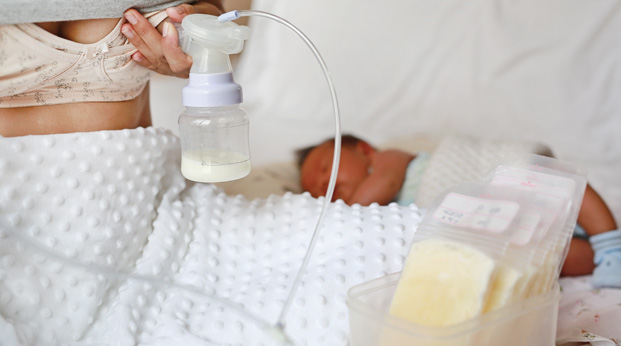
Ways To Express Your Milk by Hand or Pump

Click below to learn more about the different ways to express milk.
HAND EXPRESSION

MANUAL PUMP

ELECTRIC BREAST PUMP

Storing Your Milk

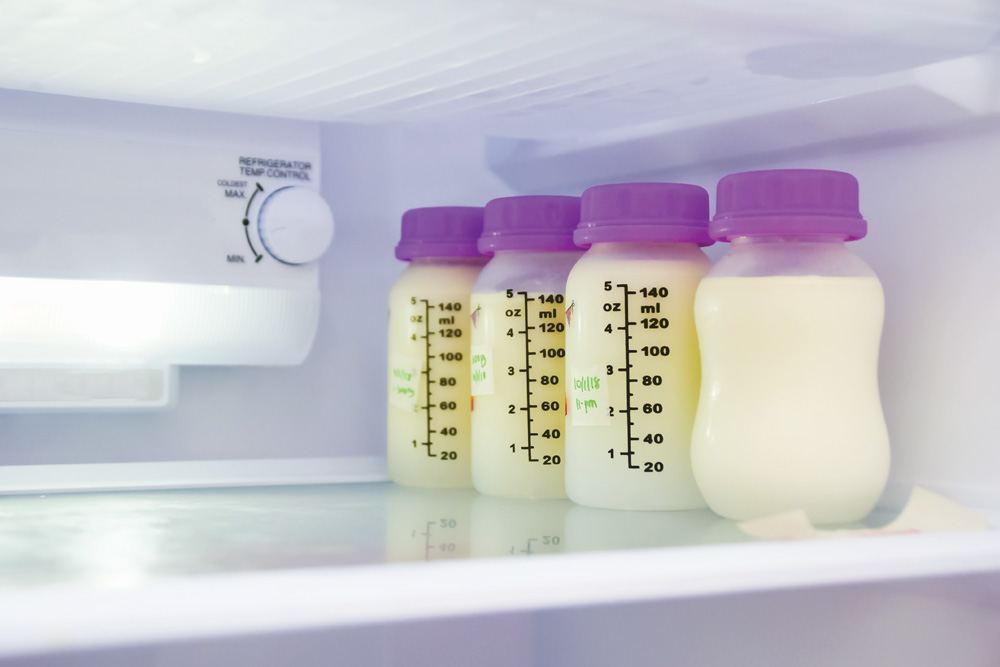
Human milk can be stored in:

  • Clean glass bottles with tight-fitting lids
  • Hard BPA-free plastic bottles with tight-fitting lids
  • Milk storage bags, which are made for freezing human milk
*Never store human milk in disposable bottle liners or plastic bags that are not intended for storing human milk.

Storage Location and Temperatures

COUNTERTOP
77°F (25°C) or colder
(room temperature)


Up to 4 Hours


1-2 Hours


Use within 2 hours after baby starts feeding. After 2 hours, leftover human milk should be discarded.

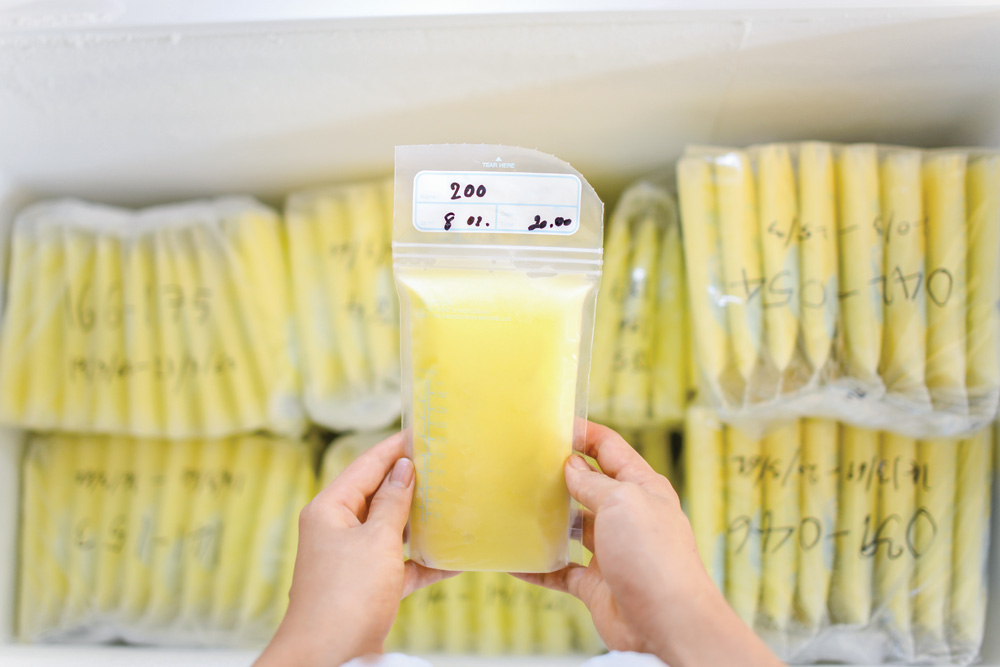
REFRIGERATOR
40°F (4°C) or colder


Up to 4 Days


Up to 24 hours


Use within 2 hours after baby starts feeding. After 2 hours, leftover human milk should be discarded.
FREEZER
0°F (-18°C) or colder


Within 6 months is best.
Up to 12 months is acceptable.


NEVER refreeze human milk after it has been thawed.


Use within 2 hours after baby starts feeding. After 2 hours, leftover human milk should be discarded.

hand-wash img

Before Expressing or Handling Human Milk

  • Wash your hands with soap and water
  • If using a pump, make sure the pump kit is clean and dry before pumping
pumping img

AFTER EACH PUMPING

  • Label the storage container with the date, the amount of milk being frozen, and your baby's name
  • Chill, refrigerate, or freeze milk right after it is expressed depending on when it will be used
  • Human milk can be stored in an insulated cooler bag with an ice pack for up to 24 hours

Tips For Freezing Milk

  • Freeze human milk in small amounts of 2 to 4 ounces (or the amount that will be offered at one feeding) to avoid wasting milk that might not be finished.
  • Try to leave an inch or so between the milk and the top of the container because milk expands when frozen.
  • Store milk in the back of the freezer.

Tips For Thawing and Warming Milk

  • Do not microwave breastmilk. Microwaving milk creates hotspots that could burn your baby and can damage the nutrients in your milk.
  • Use the oldest stored milk first.
  • You can thaw frozen milk in the refrigerator overnight, or hold the frozen bag of milk under warm running water, or set in a container of warm water. Test the temperature by dropping a little on your wrist.
  • Find the right milk temperature for your baby. Human milk does not necessarily need to be warmed. Some moms prefer to take the chill off and serve at room temperature.
  • Swirl human milk to mix the fat. Shaking the milk is not recommended because it can break down certain nutrients.
  • Use thawed human milk within 24 hours (this means from the time it is no longer frozen or completely thawed, not from the time you took it out of the freezer). Do not refreeze thawed human milk.

Safely Clean Pump Equipment

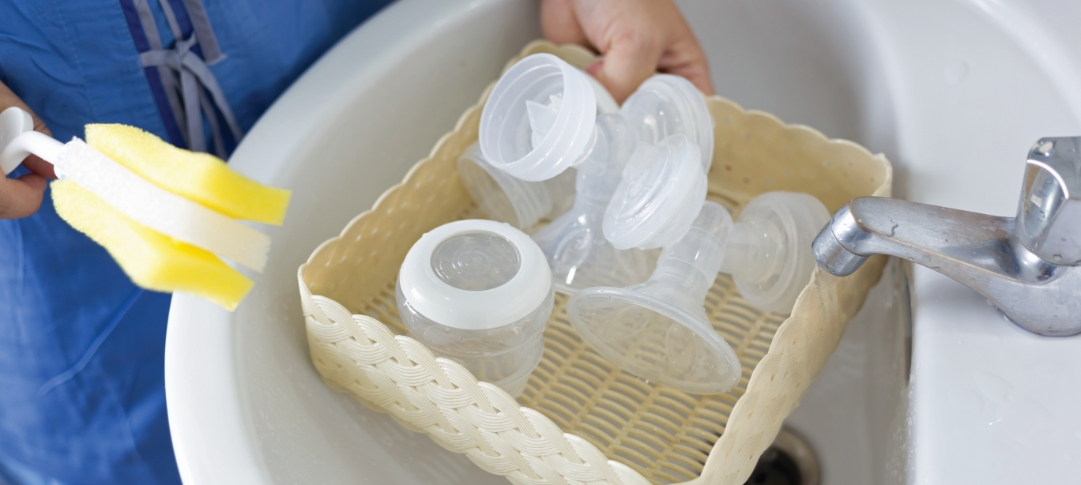
  • Take apart pump tubing and separate all parts that come in contact with your breast and milk.
  • Do not wash tubing. Tubing should not come in contact with your milk or breast so it does not need to be cleaned.
  • Rinse the pump parts by holding them under running water to remove remaining milk.
  • Do not place or wash parts in the sink. Germs in the sink could contaminate items.
  • Clean pump parts in a dishwasher or by hand in a clean basin with soap and hot water.
  • Air dry the items on a clean dishtowel, paper towel, or bottle drying rack.
  • Using clean hands, store the parts in a clean, protected area.
  • Discard and replace moldy tubing immediately.
  • Pump kits and most pumps should not be shared between users.

Sanitize for added safety:

Sanitize pump parts, wash basin, and bottle brush at least once daily after they have been cleaned. Items can be sanitized using steam, boiling water, or a dishwasher with a sanitize setting.

Sanitizing is very important if your baby is less than 3 months old, was born prematurely, or has a weakened immune system due to illness or medical treatment.

Wyoming WIC WDH Public Health

CONTACT US

1-888-996-9378
health.wyo.gov/wic
  • How to apply for WIC

Resources

  • WIC Shopper
  • WIC Smart
  • WIC Breastfeeding Support
  • Wyoming Medicaid
  • Wyoming 211
  • Tell a friend about WIC!
  • Guide to Using Your WIC Benefits
  • Wyoming WIC fa fa-facebook
  • Wyoming WIC fa fa-instagram
  • Wyoming WIC

USDA is an equal opportunity provider, employer, and lender.

Cookie PolicyPrivacy Policy

© Brush Art Corporation
This website is operated by Brush Art Corporation on behalf of the Wyoming Department of Health.

Install this web app on your iPhone: tap ios-share and then Add to Home Screen.

HAND EXPRESSION

How it works

Using clean hands, cup your breast using a c-hold (as pictured) but not touching your areola. Press your fingers firmly back towards your chest. Next, compress your hand while moving it back towards your nipple without lifting your hand from your breast. Repeat and try different positions on your breasts so you can get milk out of different milk ducts.

What’s Involved

  • Requires practice, skill, and coordination.
  • Gets easier with practice and can be as fast as pumping.
  • Good if you are not often away from your baby or you need an option that is always with you. All moms should know how to hand express, in case they need to do it unexpectedly.
  • You can talk to your local WIC office breastfeeding expert for tips on how to perform hand expression.

Average Cost

Free

MANUAL PUMP

How it works

Use your hand and wrist to operate a hand-held device to pump the milk.

What’s Involved

  • Requires practice, skill, and coordination. Useful for occasional pumping if you are away from your baby only once in a while.
  • You can talk to your local WIC office about getting a manual pump.

Average Cost

$30 to $50 (may be covered by insurance)
ELECTRIC BREAST PUMP

How it works

Runs on battery or plugs into an electrical outlet.

What’s Involved

  • Can be easier for some moms.
  • Can pump one or both breasts at the same time. Double pumping may collect more milk in less time, which is helpful if you are going back to work or school.
  • Need a place to clean and store the equipment between uses.
  • If you have insurance, they may cover the cost of a pump. You can also talk to your local WIC office about renting a pump.

Average Cost

$150 to more than $250 (often covered by insurance)

ELECTRIC BREAST PUMP

How it works

Runs on battery or plugs into an electrical outlet.

What’s Involved

  • Can be easier for some moms.
  • Can pump one or both breasts at the same time. Double pumping may collect more milk in less time, which is helpful if you are going back to work or school.
  • Need a place to clean and store the equipment between uses.
  • If you have insurance, they may cover the cost of a pump. You can also talk to your local WIC office about renting a pump.

Average Cost

$150 to more than $250 (often covered by insurance)

HAND EXPRESSION

How it works

Using clean hands, cup your breast using a c-hold (as pictured) but not touching your areola. Press your fingers firmly back towards your chest. Next, compress your hand while moving it back towards your nipple without lifting your hand from your breast. Repeat and try different positions on your breasts so you can get milk out of different milk ducts.

What’s Involved

  • Requires practice, skill, and coordination.
  • Gets easier with practice and can be as fast as pumping.
  • Good if you are not often away from your baby or you need an option that is always with you. All moms should know how to hand express, in case they need to do it unexpectedly.
  • You can talk to your local WIC office breastfeeding expert for tips on how to perform hand expression.

Average Cost

Free

MANUAL PUMP

How it works

Use your hand and wrist to operate a hand-held device to pump the milk.

What’s Involved

  • Requires practice, skill, and coordination. Useful for occasional pumping if you are away from your baby only once in a while.
  • You can talk to your local WIC office about getting a manual pump.

Average Cost

$30 to $50 (may be covered by insurance)
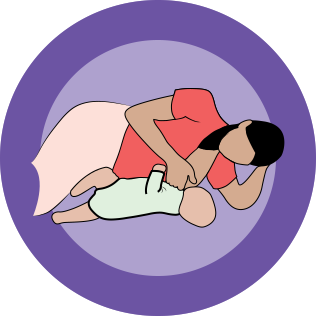
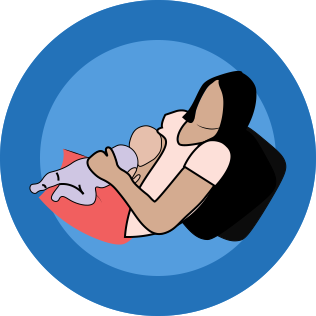
SIDE-LYING HOLD

Side-Lying Hold

  1. For the right breast, lie on your right side with your baby facing you.
  2. Pull your baby close. Your baby’s mouth should be level with your nipple.
  3. In this position, you can cradle your baby’s back with your left arm and support yourself with your right arm and/or pillows.
  4. Keep loose clothing and bedding away from your baby.
  5. Reverse for the left breast.

This hold is useful when:

  • You had a C-section
  • You want to rest while baby feeds
  • You are breastfeeding in the middle of the night
  • You and your baby are comfortable in this position
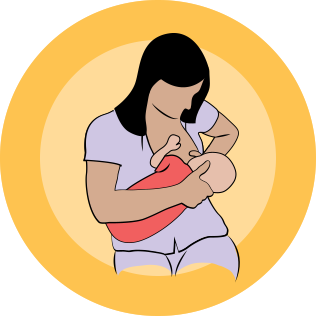
CROSS-CRADLE HOLD

Cross-Cradle Hold

  1. For the right breast, use your left arm to hold your baby’s head at your right breast and baby’s body toward your left side. A pillow across your lap can help support your left arm.
  2. Gently place your left hand behind your baby’s ears and neck, with your thumb and index finger behind each ear and your palm between baby’s shoulder blades. Turn your baby’s body toward yours so your tummies are touching.
  3. Hold your breast as if you are squeezing a sandwich. To protect your back, avoid leaning down to your baby. Instead, bring your baby to you.
  4. As your baby’s mouth opens, push gently with your left palm on baby’s head to help them latch on. Make sure you keep your fingers out of the way.
  5. Reverse for the left breast.

This hold is useful when:

  • Your baby is premature
  • Your baby has a weak suck
  • Your baby needs help to stay latched
  • Your baby needs extra head support
  • You and your baby are comfortable in this position
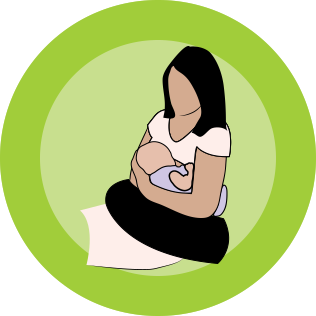
CLUTCH OR “FOOTBALL” HOLD

Clutch or “Football” Hold

  1. For the right breast, hold your baby level, facing up, at your right side.
  2. Put your baby’s head near your right nipple and support their back and legs under your right arm.
  3. Hold the base of your baby’s head with your right palm. A pillow underneath your right arm can help support your baby’s weight.
  4. To protect your back, avoid leaning down to your baby. Bring baby to you instead.
  5. Reverse for the left breast.

This hold is useful when:

  • You had a C-section
  • You have large breasts
  • You have flat or inverted nipples
  • You have a strong milk let-down
  • You are breastfeeding twins
  • Your baby likes to feed in an upright position
  • Your baby has reflux
  • You and your baby are comfortable in this position
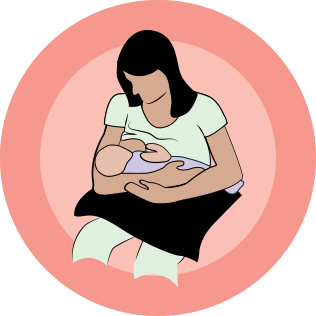
CRADLE HOLD

Cradle Hold

  1. For the right breast, cradle your baby with your right arm. Your baby will be on their left side across your lap, facing you at nipple level.
  2. Your baby’s head will rest on your right forearm with your baby’s back along your inner arm and palm.
  3. Turn your baby’s tummy toward your tummy. Your left hand is free to support your breast, if needed. Pillows can help support your arm and elbow.
  4. To protect your back, avoid leaning down to your baby. Instead, bring your baby to you.
  5. Reverse for the left breast.

This hold is useful when:

  • Your baby needs help latching on
  • You and your baby are comfortable in this position
Laid-Back Hold

Laid-Back Hold

  1. Lean back on a pillow with your baby’s tummy touching yours and their head at breast level. Some moms find that sitting up nearly straight works well. Others prefer to lean back and lie almost flat.
  2. You can place your baby’s cheek near your breast, or you may want to use one hand to hold your breast near your baby. It’s up to you and what you think feels best.
  3. Your baby will naturally find your nipple, latch, and begin to suckle.

This hold is useful when:

  • Your baby is placed on your chest right after birth
  • You have a strong milk let-down
  • You have large breasts
  • You and your baby are comfortable in this position