Skip to Content Skip to Footer
Wyoming WIC
Wyoming WIC
  • Home
  • Women
    • Women
      Breastfeeding
    • Women
      Healthy Tips for Moms
    • Women
      Postpartum
    • Women
      Pregnant
  • Infants
    • Infants
      Feeding & Nutrition
    • Infants
      Growth & Development
  • Children
    • Children
      Toddlers
    • Children
      2-5 Year Olds
  • Families
    • Families
      Activity and Play
    • Families
      Dads
    • Families
      Food & Family Meals
    • Families
      Immunizations
    • Families
      Safety
  • Live Well Blog
  • Food Shopping Guide
  • Español

How To Know If Your Baby Is Getting Enough Milk

  • Home
  • Women
  • Breastfeeding
  • Learning to Breastfeed
  • Is My Baby Getting Enough Milk?

It is normal for your baby to lose a small amount of weight in the first few days of life. If your baby seems happy and is gaining weight after the first week, they are most likely getting enough milk.

Your baby is most likely getting enough milk if they are:​

  • Alert and active when awake
  • Growing and gaining weight
  • Having clear or pale-yellow pee
  • Having several poopy and at least 6 wet diapers each day
You may want to keep track of your baby’s wet and poopy diapers. The charts below show the smallest number of wet and poopy diapers your baby should have in the first week. Around 10-15 days after delivery, your baby may poop after every feeding or less often.
Day 1

Number of Wet Diapers …………………………………………………………..1

Number of poopy diapers ………………… 1st within 24 hours of birth

Color and Texture of Poop ……………………….. Thick, tarry, and black

Day 2

Number of Wet Diapers ………………………………………………………….. 2

Number of poopy diapers ………………………………………………………. 3

Color and Texture of Poop ………………………… Thick, tarry, and black

Day 3

Number of Wet Diapers …………..……………………………………………… 5

Number of poopy diapers ……………………………………………………….. 3

Color and Texture of Poop ……………………. Looser, greenish to yellow

Day 4

Number of Wet Diapers ……………..……………….…………………………… 6

Number of poopy diapers ……………………………………………………….. 3

Color and Texture of Poop ……………………… Soft, watery, and yellow

Day 5

Number of Wet Diapers …………………………………………………………… 6

Number of poopy diapers ……………………………………………………….. 3

Color and Texture of Poop ……………………… Loose and seedy, yellow

Day 6

Number of Wet Diapers …………………………………………………………… 6

Number of poopy diapers ……………………………………………………….. 3

Color and Texture of Poop ……………………….. Loose and seedy, yellow

Day 7

Number of Wet Diapers …………………………………………………………… 6

Number of poopy diapers ……………………………………………………….. 3

Color and Texture of Poop ……………… More, loose and seedy, yellow

Day 5

Number of Wet Diapers ……………..…………………………………………… 6

Number of poopy diapers ……………………………………………………….. 3

Color and Texture of Poop ……………………… Loose and seedy, yellow

Day 6

Number of Wet Diapers ………………………………………………………… 6

Number of poopy diapers ……………………………………………………….. 3

Color and Texture of Poop …………………….. Loose and seedy, yellow

Day 7

Number of Wet Diapers …………………………..……………………………… 6

Number of poopy diapers ……………………………………………………….. 3

Color and Texture of Poop ………….…………… Loose and seedy, yellow

Let your baby nurse until they are full. Some signs your baby is done eating are:

  • Baby releases or "falls off" your breast
  • Baby turns away from your breast
  • Baby relaxes their body and opens their fists

If your baby finishes eating on one breast and seems full, try burping your baby and changing their diaper (if needed), then offer the other breast. If your baby doesn’t seem interested or doesn’t want to latch, they may not be hungry anymore. Some babies may eat from both sides at every feeding, while others may only eat from one side.


Things you should NOT worry about:

  • How your breasts feel. Your breasts will feel softer and less full as your milk supply adjusts to your baby's needs. This does not mean you have low supply.
  • If your baby's feeds are bunched together. This is called cluster feeding and happens when your baby starts nursing more often and for longer. This can happen in the evenings or because of growth spurts.
  • Not getting much milk when you express. Your baby is much more effective than a pump or hand expression at getting out milk. Find tips to help you pump.

DAILY BREASTFEEDING JOURNAL​

This daily breastfeeding journal is a helpful tool for new parents. It may even be a nice keepsake memory to look back on!

KEEP TRACK OF:

  • How often and for how long baby eats
  • Number of wet and poopy diapers
  • Questions to ask your healthcare provider or WIC
  • Notes about how you and baby are feeling
Click here to download or print this free Daily Breastfeeding Journal.
Wyoming WIC WDH Public Health

CONTACT US

1-888-996-9378
health.wyo.gov/wic
  • How to apply for WIC

Resources

  • WIC Shopper
  • WIC Smart
  • WIC Breastfeeding Support
  • Wyoming Medicaid
  • Wyoming 211
  • Tell a friend about WIC!
  • Guide to Using Your WIC Benefits
  • Wyoming WIC fa fa-facebook
  • Wyoming WIC fa fa-instagram
  • Wyoming WIC

USDA is an equal opportunity provider, employer, and lender.

Cookie PolicyPrivacy Policy

© Brush Art Corporation
This website is operated by Brush Art Corporation on behalf of the Wyoming Department of Health.

Install this web app on your iPhone: tap ios-share and then Add to Home Screen.

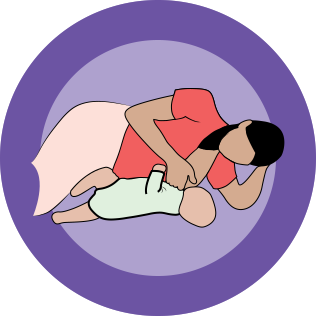
SIDE-LYING HOLD

Side-Lying Hold

  1. For the right breast, lie on your right side with your baby facing you.
  2. Pull your baby close. Your baby’s mouth should be level with your nipple.
  3. In this position, you can cradle your baby’s back with your left arm and support yourself with your right arm and/or pillows.
  4. Keep loose clothing and bedding away from your baby.
  5. Reverse for the left breast.

This hold is useful when:

  • You had a C-section
  • You want to rest while baby feeds
  • You are breastfeeding in the middle of the night
  • You and your baby are comfortable in this position
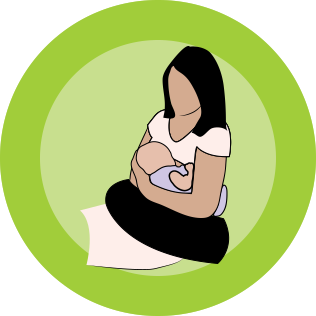
CROSS-CRADLE HOLD

Cross-Cradle Hold

  1. For the right breast, use your left arm to hold your baby’s head at your right breast and baby’s body toward your left side. A pillow across your lap can help support your left arm.
  2. Gently place your left hand behind your baby’s ears and neck, with your thumb and index finger behind each ear and your palm between baby’s shoulder blades. Turn your baby’s body toward yours so your tummies are touching.
  3. Hold your breast as if you are squeezing a sandwich. To protect your back, avoid leaning down to your baby. Instead, bring your baby to you.
  4. As your baby’s mouth opens, push gently with your left palm on baby’s head to help them latch on. Make sure you keep your fingers out of the way.
  5. Reverse for the left breast.

This hold is useful when:

  • Your baby is premature
  • Your baby has a weak suck
  • Your baby needs help to stay latched
  • Your baby needs extra head support
  • You and your baby are comfortable in this position
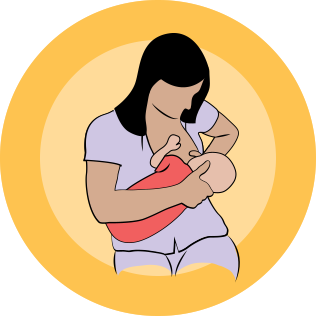
CLUTCH OR “FOOTBALL” HOLD

Clutch or “Football” Hold

  1. For the right breast, hold your baby level, facing up, at your right side.
  2. Put your baby’s head near your right nipple and support their back and legs under your right arm.
  3. Hold the base of your baby’s head with your right palm. A pillow underneath your right arm can help support your baby’s weight.
  4. To protect your back, avoid leaning down to your baby. Bring baby to you instead.
  5. Reverse for the left breast.

This hold is useful when:

  • You had a C-section
  • You have large breasts
  • You have flat or inverted nipples
  • You have a strong milk let-down
  • You are breastfeeding twins
  • Your baby likes to feed in an upright position
  • Your baby has reflux
  • You and your baby are comfortable in this position
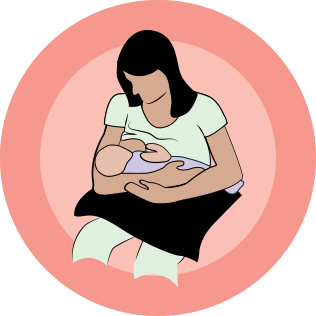
CRADLE HOLD

Cradle Hold

  1. For the right breast, cradle your baby with your right arm. Your baby will be on their left side across your lap, facing you at nipple level.
  2. Your baby’s head will rest on your right forearm with your baby’s back along your inner arm and palm.
  3. Turn your baby’s tummy toward your tummy. Your left hand is free to support your breast, if needed. Pillows can help support your arm and elbow.
  4. To protect your back, avoid leaning down to your baby. Instead, bring your baby to you.
  5. Reverse for the left breast.

This hold is useful when:

  • Your baby needs help latching on
  • You and your baby are comfortable in this position
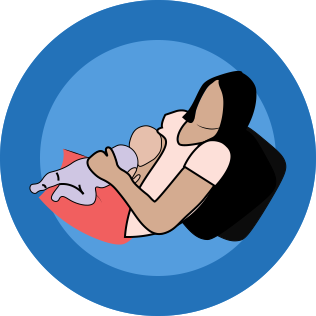
Laid-Back Hold

Laid-Back Hold

  1. Lean back on a pillow with your baby’s tummy touching yours and their head at breast level. Some moms find that sitting up nearly straight works well. Others prefer to lean back and lie almost flat.
  2. You can place your baby’s cheek near your breast, or you may want to use one hand to hold your breast near your baby. It’s up to you and what you think feels best.
  3. Your baby will naturally find your nipple, latch, and begin to suckle.

This hold is useful when:

  • Your baby is placed on your chest right after birth
  • You have a strong milk let-down
  • You have large breasts
  • You and your baby are comfortable in this position