
Skip to Content Skip to Footer
Wyoming WIC
Wyoming WIC
  • Home
  • Women
    • Women
      Breastfeeding
    • Women
      Healthy Tips for Moms
    • Women
      Postpartum
    • Women
      Pregnant
  • Infants
    • Infants
      Feeding & Nutrition
    • Infants
      Growth & Development
  • Children
    • Children
      Toddlers
    • Children
      2-5 Year Olds
  • Families
    • Families
      Activity and Play
    • Families
      Dads
    • Families
      Food & Family Meals
    • Families
      Immunizations
    • Families
      Safety
  • Live Well Blog
  • Food Shopping Guide
  • Español
CryingBabyBanner

Colic: A Parent’s Survival Guide

  • Home
  • Live Well Blog
  • Colic: A Parent’s Survival Guide
Colic-A-Parents-Survival-Guide-QR-code
September 22, 2021 Infant

Even though it has been many years ago, I can clearly remember the extreme crying every night from 7:00-11:00pm. When my son was in the midst of his colic, there were times that my husband and I had to take 15 minute shifts with him, because neither of us could tolerate the crying for very long. We tried everything we could think of and nothing helped. We took our son to the pediatrician and she said “Congratulations — you have survived the first month of colic. Hang in there Mom!”. I was so frustrated, I was afraid my baby would cry like this forever. Luckily he didn’t.

What is colic?

Colic is when babies have an intense high-pitched cry around the same time every day, usually in the late afternoon or evening. Colic seems to start for no reason and babies with colic seem almost impossible to comfort.

Babies will often pull their legs up and clench their fists using their whole bodies when they cry. Colic is common for babies and extremely frustrating for parents. Colic usually starts a few weeks after birth, peaks around 2 months and goes away around 4-5 months of age.

There are several theories about what causes colic, however there has been no proven cause, so there is not one treatment that helps all babies. Some of the possible causes are: immature nervous or digestive systems, milk intolerance, reflux, gas, hormone changes, postpartum depression, maternal anxiety, or not getting enough hindmilk when breastfeeding. Some health care professionals believe colic is a response to pain while others believe it is a normal stage of infant development.

If you think your baby may have colic, do the following:

  • Keep a log of their crying including start and stop times and anything that seemed to bring comfort.
  • Write down what and how much they eat, how long it took and how often they spit up.
  • Keep track of his pooping, especially any changes.
  • Talk to their health care provider about a medical cause such as reflux or milk sensitivity.
  • Make sure baby has a good latch on the breast. Not latching well can cause inadequate emptying and swallowing of air.
  • If you are breastfeeding, your baby could be sensitive to a food you are eating. Try cutting out dairy products for a few weeks to see if it makes a difference. Caffeine, wheat and soy are other foods in your diet your baby may be sensitive to; try taking them out of your diet one at a time.
  • During nursing, make sure they are not changing sides too quickly. Emptying one breast before switching sides will ensure baby gets enough of the higher fat hindmilk.
  • If you have an overactive letdown reflex, this can cause baby to be fussy. Talk to a WIC peer counselor or lactation consultant.
  • If you are using formula, ask their health care provider if changing to a different formula would help.
  • Holding baby and baby’s bottle more upright when feeding or trying a different nipple or bottle can help reduce gas.

Unfortunately, there may be nothing that prevents or stops colic; here are techniques that may help:

  • Holding
  • Rocking
  • Swaddling
  • Using a vibrating infant seat
  • Placing baby on their left side or tummy across your lap and patting their back
  • Shushing
  • Swinging baby either in a swing or in your arms
  • Using a pacifier
  • Playing soft music or singing
  • Walking the floor
  • Going for a car ride

If colic is affecting how your baby eats, tell their health care provider. A colicky baby is generally gaining weight well and otherwise healthy. If they ever have trouble breathing or their lips or face turn bluish or grayish color when crying, eating or sleeping call their health care provider or seek emergency medical treatment.

Even though you are exhausted and frustrated, the most important thing to remember is NEVER SHAKE a BABY! Shaking a baby can cause permanent brain damage, blindness and even death. If you are getting angry, lay baby in their crib safely and take a 10 minute break. Sit outside, put on some headphones with your favorite music or take a hot shower to relax. Never be afraid to ask for help: you do not have to go through this alone. Have a friend or family member watch your baby so you can get out of the house. Talk to someone. Tell them how you are feeling and call your health care professional if you feel that you are depressed or having trouble handling this.

Think positively: colic doesn’t last forever and there are no permanent effects on your child as they grow up. My son’s colic finally ended after 4 months and he has grown to be a healthy, happy teenager.

  • Infant
    • The Basics of Paced Bottle-Feeding
    • How Do I Know If My Baby Could Be Tongue-Tied?
    • Protect Your Baby from Cronobacter
    • Exploring the World with Baby – Sensory Play
    • Get Your Baby “Back” to Sleep in a Safe Environment
  • Children
    • Shopping With Kids: A Simple Way to Help Them Like More Foods
    • Pumpkin Fun: Free and Healthy Activities for Kids Under 5
    • Letting Your Child Play with Food Can Be a Good Thing
    • Is Snack Time Treat Time?
    • Fun Ways to Learn About Healthy Food and Get Moving!
  • General /Family
    • Finding Calm When Life Gets Busy: Stress-Management for Parents
    • February Is National Heart Month: Simple Ways to Show Your Heart Some Love
    • 10 Ways to Enjoy Avocados – And Helpful Tips to Feed with Confidence
    • Food, Feelings, and Finding Balance: Understanding Disordered Eating
    • Liquid Calories – Time to Rethink Your Drink?
  • Women
    • How to Know Your Baby Is Getting Enough Breastmilk
    • Breastfeeding Through Growth Spurts and Sleep Changes
    • Baby Blues… or Is It Something More?
    • Gut Health and Gestational Diabetes
    • Blood Pressure: Do You Know Your Numbers?
  • Recipes
    • Heart-Healthy Recipe: Banana Berry Oatmeal Cups
    • Is the Chia Seed Challenge Worth It?
    • Extra Vegetables Quiche
    • Easy Pumpkin Muffins
    • Confetti Bean Salad
Wyoming WIC WDH Public Health

CONTACT US

1-888-996-9378
health.wyo.gov/wic
  • How to apply for WIC

Resources

  • WIC Shopper
  • WIC Smart
  • WIC Breastfeeding Support
  • Wyoming Medicaid
  • Wyoming 211
  • Tell a friend about WIC!
  • Guide to Using Your WIC Benefits
  • Wyoming WIC fa fa-facebook
  • Wyoming WIC fa fa-instagram
  • Wyoming WIC

USDA is an equal opportunity provider, employer, and lender.

Cookie PolicyPrivacy Policy

© Brush Art Corporation
This website is operated by Brush Art Corporation on behalf of the Wyoming Department of Health.

Install this web app on your iPhone: tap ios-share and then Add to Home Screen.

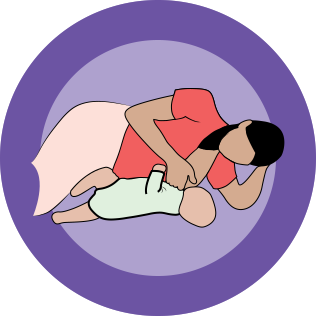
SIDE-LYING HOLD

Side-Lying Hold

  1. For the right breast, lie on your right side with your baby facing you.
  2. Pull your baby close. Your baby’s mouth should be level with your nipple.
  3. In this position, you can cradle your baby’s back with your left arm and support yourself with your right arm and/or pillows.
  4. Keep loose clothing and bedding away from your baby.
  5. Reverse for the left breast.

This hold is useful when:

  • You had a C-section
  • You want to rest while baby feeds
  • You are breastfeeding in the middle of the night
  • You and your baby are comfortable in this position
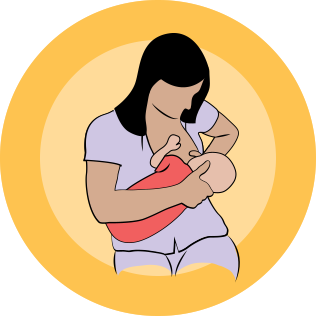
CROSS-CRADLE HOLD

Cross-Cradle Hold

  1. For the right breast, use your left arm to hold your baby’s head at your right breast and baby’s body toward your left side. A pillow across your lap can help support your left arm.
  2. Gently place your left hand behind your baby’s ears and neck, with your thumb and index finger behind each ear and your palm between baby’s shoulder blades. Turn your baby’s body toward yours so your tummies are touching.
  3. Hold your breast as if you are squeezing a sandwich. To protect your back, avoid leaning down to your baby. Instead, bring your baby to you.
  4. As your baby’s mouth opens, push gently with your left palm on baby’s head to help them latch on. Make sure you keep your fingers out of the way.
  5. Reverse for the left breast.

This hold is useful when:

  • Your baby is premature
  • Your baby has a weak suck
  • Your baby needs help to stay latched
  • Your baby needs extra head support
  • You and your baby are comfortable in this position
CLUTCH OR “FOOTBALL” HOLD

Clutch or “Football” Hold

  1. For the right breast, hold your baby level, facing up, at your right side.
  2. Put your baby’s head near your right nipple and support their back and legs under your right arm.
  3. Hold the base of your baby’s head with your right palm. A pillow underneath your right arm can help support your baby’s weight.
  4. To protect your back, avoid leaning down to your baby. Bring baby to you instead.
  5. Reverse for the left breast.

This hold is useful when:

  • You had a C-section
  • You have large breasts
  • You have flat or inverted nipples
  • You have a strong milk let-down
  • You are breastfeeding twins
  • Your baby likes to feed in an upright position
  • Your baby has reflux
  • You and your baby are comfortable in this position
CRADLE HOLD

Cradle Hold

  1. For the right breast, cradle your baby with your right arm. Your baby will be on their left side across your lap, facing you at nipple level.
  2. Your baby’s head will rest on your right forearm with your baby’s back along your inner arm and palm.
  3. Turn your baby’s tummy toward your tummy. Your left hand is free to support your breast, if needed. Pillows can help support your arm and elbow.
  4. To protect your back, avoid leaning down to your baby. Instead, bring your baby to you.
  5. Reverse for the left breast.

This hold is useful when:

  • Your baby needs help latching on
  • You and your baby are comfortable in this position
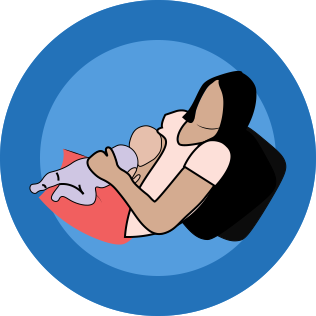
Laid-Back Hold

Laid-Back Hold

  1. Lean back on a pillow with your baby’s tummy touching yours and their head at breast level. Some moms find that sitting up nearly straight works well. Others prefer to lean back and lie almost flat.
  2. You can place your baby’s cheek near your breast, or you may want to use one hand to hold your breast near your baby. It’s up to you and what you think feels best.
  3. Your baby will naturally find your nipple, latch, and begin to suckle.

This hold is useful when:

  • Your baby is placed on your chest right after birth
  • You have a strong milk let-down
  • You have large breasts
  • You and your baby are comfortable in this position