Get Your Baby “Back” to Sleep in a Safe Environment
July 17, 2024Infant
If you look at photos of your crib from when you were growing up, chances are you’d see bumper pads, a cute blanket and maybe even some stuffed animals. We now know that all those things, even though adorable, could increase the risk of a baby dying from a sleep related infant death.
Sudden Unexplained Infant Death (SUID) and Sudden Infant Death Syndrome (SIDS) are terms used to explain the sudden, unexplained deaths of babies younger than 12 months old. Sleep-related infant death is a common cause of SUID.
Since young babies can’t turn their heads, if they somehow scoot next to a toy, bumper pad, or blanket, or wedge their head between a gap in the mattress, it could prevent them from breathing.
Luckily, there are things you can do —
even while pregnant — to prevent Sudden Unexplained Infant Death.
Tips from the American Academy of Pediatrics
Always put your baby on their back when you put them to sleep. Babies in the NICU may be put on their stomach, but once home, they need to be on their backs.
The only thing in the crib should be your baby! No toys, top sheets, blankets or bumper pads.
The sleep surface should be firm, not squishy, with a fitted sheet on the mattress. Don’t attach anything to the slats of the crib or incline the mattress.
Share your room, but not your bed with your baby – it can decrease the risk of SIDS by 50% in the first three months of a baby’s life. You can feed and comfort your baby in your bed, but put them to sleep in their own crib or bassinet.
Drugs, alcohol, and sleep don’t mix with sharing the bed with your baby, even if it’s just for a little while. If you’re under the influence, avoid bringing baby to bed with you, or napping together on the couch, etc. There’s a good chance you could fall asleep, and your baby wouldn’t be safe.
Avoid overheating your baby because it also increases the risk of sleep related infant death. Signs of overheating include sweating or when the chest feels hot to the touch.
Common Questions
What if a baby has reflux? —shouldn’t they be put on their stomach to sleep?
No, according to the American Academy of Pediatrics (AAP), all babies should be put on their backs, unless your pediatrician has told you otherwise.
Is it OK for my baby to sleep with a pacifier?
Yes! It’s good to offer a pacifier at bedtime and naptime but wait until after breastfeeding is well established. Don’t hang it around the neck or attach to clothes while sleeping. If it falls out when baby is asleep, there is no need to put the pacifier back in.
Won’t my baby be cold without a blanket?
A good rule of thumb is to dress your baby for sleep with one more layer than you are wearing when not in bed. Dress your baby in footed pajamas or in winter, a sleep sack or blanket sleeper to keep them warm. But—don’t overdress your baby because overheated babies are more at risk of SUID.
What about when my baby starts rolling over?
Continue putting them to sleep on their back but if they roll over to the stomach, it’s ok to leave them like that. You should stop swaddling when your baby starts trying to roll over—usually at around 3-4 months.
Is it ok to put baby on their tummy when awake and not in the crib?
Yes! In fact, “tummy time” is encouraged and can decrease the risk of SUID. The AAP recommends a few minutes each day of supervised tummy time soon after you bring your baby home, increasing to 15-30 total minutes a day by the time your baby is 7 weeks old.
Other Things You can do to Prevent Sleep Related Death
Get regular prenatal care and avoid alcohol, marijuana, opioids, and illicit drugs while pregnant.
Avoid smoking in your baby’s environment, even if you smoke outside. This includes vaping and electronic cigarettes. Keep your car and home smoke-free to keep your baby away from second-hand smoke.
Don’t use weighted swaddle blankets or place weighted objects inside swaddle blankets.
Don’t smoke or vape when pregnant—it’s a major risk factor for SIDS.
Breastfeed your baby as long as possible. Breastfeeding for at least 2 months can lower your baby’s risk of SIDS by about 50%.
Get regular prenatal care and avoid alcohol, marijuana, opioids, and illicit drugs while pregnant.
Don’t smoke or vape when pregnant—it’s a major risk factor for SIDS.
Avoid smoking in your baby’s environment, even if you smoke outside. This includes vaping and electronic cigarettes. Keep your car and home smoke-free to keep your baby away from second-hand smoke.
Breastfeed your baby as long as possible. Breastfeeding for at least 2 months can lower your baby’s risk of SIDS by about 50%.
Don’t use weighted swaddle blankets or place weighted objects inside swaddle blankets.
Many sleep-related deaths are preventable.
Keep your baby safe when they sleep – every nap, every night!
Install this web app on your iPhone: tap and then Add to Home Screen.
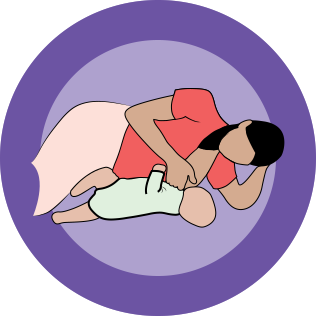
Side-Lying Hold
For the right breast, lie on your right side with your baby facing you.
Pull your baby close. Your baby’s mouth should be level with your nipple.
In this position, you can cradle your baby’s back with your left arm and support yourself with your right arm and/or pillows.
Keep loose clothing and bedding away from your baby.
Reverse for the left breast.
This hold is useful when:
You had a C-section
You want to rest while baby feeds
You are breastfeeding in the middle of the night
You and your baby are comfortable in this position
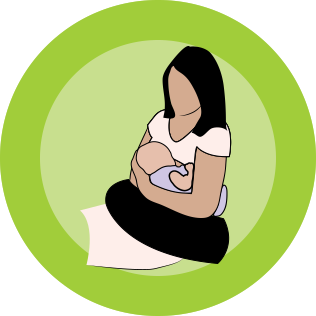
Cross-Cradle Hold
For the right breast, use your left arm to hold your baby’s head at your right breast and baby’s body toward your left side. A pillow across your lap can help support your left arm.
Gently place your left hand behind your baby’s ears and neck, with your thumb and index finger behind each ear and your palm between baby’s shoulder blades. Turn your baby’s body toward yours so your tummies are touching.
Hold your breast as if you are squeezing a sandwich. To protect your back, avoid leaning down to your baby. Instead, bring your baby to you.
As your baby’s mouth opens, push gently with your left palm on baby’s head to help them latch on. Make sure you keep your fingers out of the way.
Reverse for the left breast.
This hold is useful when:
Your baby is premature
Your baby has a weak suck
Your baby needs help to stay latched
Your baby needs extra head support
You and your baby are comfortable in this position
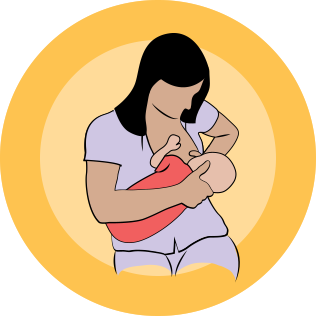
Clutch or “Football” Hold
For the right breast, hold your baby level, facing up, at your right side.
Put your baby’s head near your right nipple and support their back and legs under your right arm.
Hold the base of your baby’s head with your right palm. A pillow underneath your right arm can help support your baby’s weight.
To protect your back, avoid leaning down to your baby. Bring baby to you instead.
Reverse for the left breast.
This hold is useful when:
You had a C-section
You have large breasts
You have flat or inverted nipples
You have a strong milk let-down
You are breastfeeding twins
Your baby likes to feed in an upright position
Your baby has reflux
You and your baby are comfortable in this position
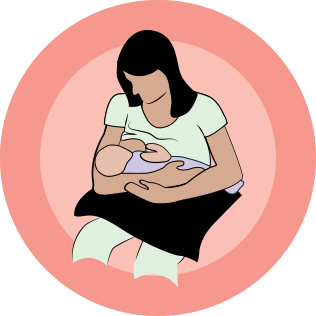
Cradle Hold
For the right breast, cradle your baby with your right arm. Your baby will be on their left side across your lap, facing you at nipple level.
Your baby’s head will rest on your right forearm with your baby’s back along your inner arm and palm.
Turn your baby’s tummy toward your tummy. Your left hand is free to support your breast, if needed. Pillows can help support your arm and elbow.
To protect your back, avoid leaning down to your baby. Instead, bring your baby to you.
Reverse for the left breast.
This hold is useful when:
Your baby needs help latching on
You and your baby are comfortable in this position
Laid-Back Hold
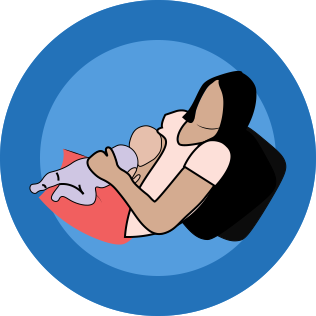
Lean back on a pillow with your baby’s tummy touching yours and their head at breast level. Some moms find that sitting up nearly straight works well. Others prefer to lean back and lie almost flat.
You can place your baby’s cheek near your breast, or you may want to use one hand to hold your breast near your baby. It’s up to you and what you think feels best.
Your baby will naturally find your nipple, latch, and begin to suckle.
This hold is useful when:
Your baby is placed on your chest right after birth
You have a strong milk let-down
You have large breasts
You and your baby are comfortable in this position





 and then Add to Home Screen.