Increasing Milk Supply: Myths vs. Facts About Breastfeeding
May 13, 2026Women
Increasing Milk Supply: Myth vs. Fact
Many parents worry about their milk supply at some point during breastfeeding. You may wonder if your baby is getting enough milk or if there are ways to make more. The good news is, your body is designed to make the milk your baby needs. Understanding what really helps milk supply (and what doesn’t) can make breastfeeding feel less stressful.
Below are some common myths and the facts about milk supply.
Facts:
FACT #1: Frequent Feeding Helps Your Milk Supply
Your milk supply works on a simple system: the more milk that’s removed, the more milk your body makes. Most babies breastfeed 8–12 times in 24 hours, especially during the early months. This frequent feeding tells your body to keep making milk.
Feeding on demand – or when your baby shows hunger cues – also helps maintain a healthy milk supply. Strict feeding schedules can sometimes reduce milk supply, especially in the early weeks.
Feed your baby on demand when they show hunger cues like:
Rooting or turning their head toward the breast
Sucking on their hands
Opening their mouth or smacking their lips
Becoming more alert or fussy
Tip!
Try not to wait until your baby is crying before feeding. Crying is a late hunger cue.
FACT #2: How Well You Remove Milk Matters
Milk removal is another key part of milk production. Your baby helps you remove milk by breastfeeding directly at the breast or drinking milk you have pumped. For milk to flow well, breastfeeding and pumping should be comfortable. Pain during breastfeeding or pumping is not normal and may be a sign that something needs to be adjusted.
Comfortable, effective milk removal helps support a steady milk supply.
If feeding or pumping is painful, a WIC breastfeeding peer counselor or lactation consultant can help check things like:
Baby’s latch
Pump fit or settings
Feeding position
Breastfeeding shouldn’t hurt; ask for help if it does.
Remember!
FACT #3: Drink Water When You Are Thirsty
Breastfeeding can make you feel thirsty, so it helps to keep a water bottle nearby throughout the day. Most parents naturally drink more fluids while breastfeeding.
There is no need to force large amounts of water. Drinking when you are thirsty is usually enough.
FACT #4: Rest Supports Your Body
Caring for a new baby can be exhausting. Rest whenever you can to help support your overall health and well-being. Even small periods of rest can make a difference.
This might look like:
Going to bed earlier than usual
Taking naps when your baby naps
Asking for help with household tasks
Myths:
MYTH #1: Vitamins Increase Milk Supply
Many healthcare providers recommend continuing a prenatal vitamin after birth. Taking a prenatal vitamin while breastfeeding can help support your overall nutrition. However, vitamins do not directly increase milk supply.
Think of vitamins as a way to support your overall health, not as a way to produce more milk.
MYTH #2: Special Foods Increase Milk Supply
You may have heard that certain foods – like lactation cookies, brownies, or special drinks – can increase milk supply. These products are often marketed to breastfeeding parents, but there is little evidence that they increase milk production. You can certainly enjoy these foods if you like them, just know they are not necessary for making milk.
What really matters is eating regular, balanced meals and staying hydrated. Your body needs energy and nutrients to support breastfeeding.
Try to include:
Protein foods (eggs, beans, chicken, fish, yogurt)
Healthy fats (nuts, seeds, avocado)
Fruits and vegetables
Whole grains
When to Reach Out for Help
If you have questions or concerns about your milk supply, support is available. Your local WIC office can connect you with a breastfeeding peer counselor who understands the challenges of breastfeeding and can offer guidance and encouragement. Sometimes a small adjustment – like improving latch or feeding more often – can make a big difference.
Your body is designed to nourish your baby. With the right support and information, you can feel confident in your breastfeeding journey.
Install this web app on your iPhone: tap and then Add to Home Screen.
Side-Lying Hold
For the right breast, lie on your right side with your baby facing you.
Pull your baby close. Your baby’s mouth should be level with your nipple.
In this position, you can cradle your baby’s back with your left arm and support yourself with your right arm and/or pillows.
Keep loose clothing and bedding away from your baby.
Reverse for the left breast.
This hold is useful when:
You had a C-section
You want to rest while baby feeds
You are breastfeeding in the middle of the night
You and your baby are comfortable in this position
Cross-Cradle Hold
For the right breast, use your left arm to hold your baby’s head at your right breast and baby’s body toward your left side. A pillow across your lap can help support your left arm.
Gently place your left hand behind your baby’s ears and neck, with your thumb and index finger behind each ear and your palm between baby’s shoulder blades. Turn your baby’s body toward yours so your tummies are touching.
Hold your breast as if you are squeezing a sandwich. To protect your back, avoid leaning down to your baby. Instead, bring your baby to you.
As your baby’s mouth opens, push gently with your left palm on baby’s head to help them latch on. Make sure you keep your fingers out of the way.
Reverse for the left breast.
This hold is useful when:
Your baby is premature
Your baby has a weak suck
Your baby needs help to stay latched
Your baby needs extra head support
You and your baby are comfortable in this position
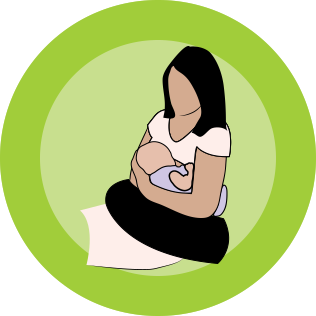
Clutch or “Football” Hold
For the right breast, hold your baby level, facing up, at your right side.
Put your baby’s head near your right nipple and support their back and legs under your right arm.
Hold the base of your baby’s head with your right palm. A pillow underneath your right arm can help support your baby’s weight.
To protect your back, avoid leaning down to your baby. Bring baby to you instead.
Reverse for the left breast.
This hold is useful when:
You had a C-section
You have large breasts
You have flat or inverted nipples
You have a strong milk let-down
You are breastfeeding twins
Your baby likes to feed in an upright position
Your baby has reflux
You and your baby are comfortable in this position
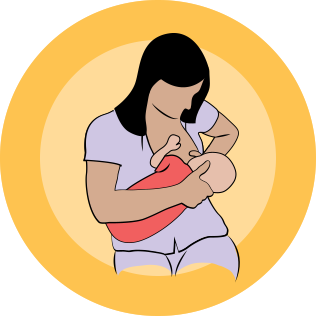
Cradle Hold
For the right breast, cradle your baby with your right arm. Your baby will be on their left side across your lap, facing you at nipple level.
Your baby’s head will rest on your right forearm with your baby’s back along your inner arm and palm.
Turn your baby’s tummy toward your tummy. Your left hand is free to support your breast, if needed. Pillows can help support your arm and elbow.
To protect your back, avoid leaning down to your baby. Instead, bring your baby to you.
Reverse for the left breast.
This hold is useful when:
Your baby needs help latching on
You and your baby are comfortable in this position
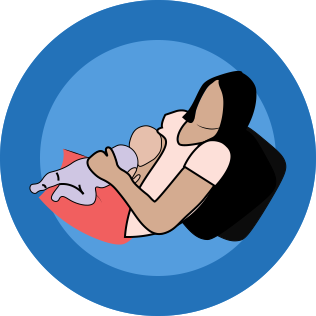
Laid-Back Hold
Lean back on a pillow with your baby’s tummy touching yours and their head at breast level. Some moms find that sitting up nearly straight works well. Others prefer to lean back and lie almost flat.
You can place your baby’s cheek near your breast, or you may want to use one hand to hold your breast near your baby. It’s up to you and what you think feels best.
Your baby will naturally find your nipple, latch, and begin to suckle.
This hold is useful when:
Your baby is placed on your chest right after birth
You have a strong milk let-down
You have large breasts
You and your baby are comfortable in this position



 Facts:




 Myths:

 When to Reach Out for Help
 and then Add to Home Screen.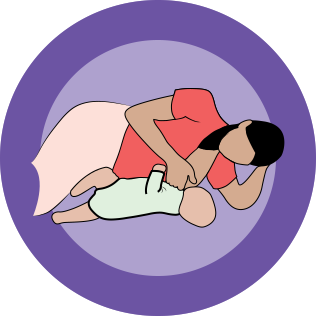

 Increasing Milk Supply: Myth vs. Fact